‘We belong here’: Hundreds march across California for immigrant rights
Our content is free to use with appropriate credit. See the terms.
VACAVILLE, Calif. — More than 100 people gathered in a circle in the shade of Andrews Park. They were Christian faith leaders, Native American elders, toddlers, activists with decades of experience and first-time protesters, all bound by the same goal: to walk almost 40 miles in three days to advocate for immigrant rights.
The group stretched their limbs and adjusted backpacks while organizers led a safety briefing. Faith leaders offered a blessing for protection and strength. As the group stepped onto the quiet streets of Vacaville, a chorus of voices rose in unison: “Sí se puede!”
This marked the beginning of the third annual “Three-Day Walk for Immigrant Rights,” organized by the Northern California Coalition for Just Immigration Reform.
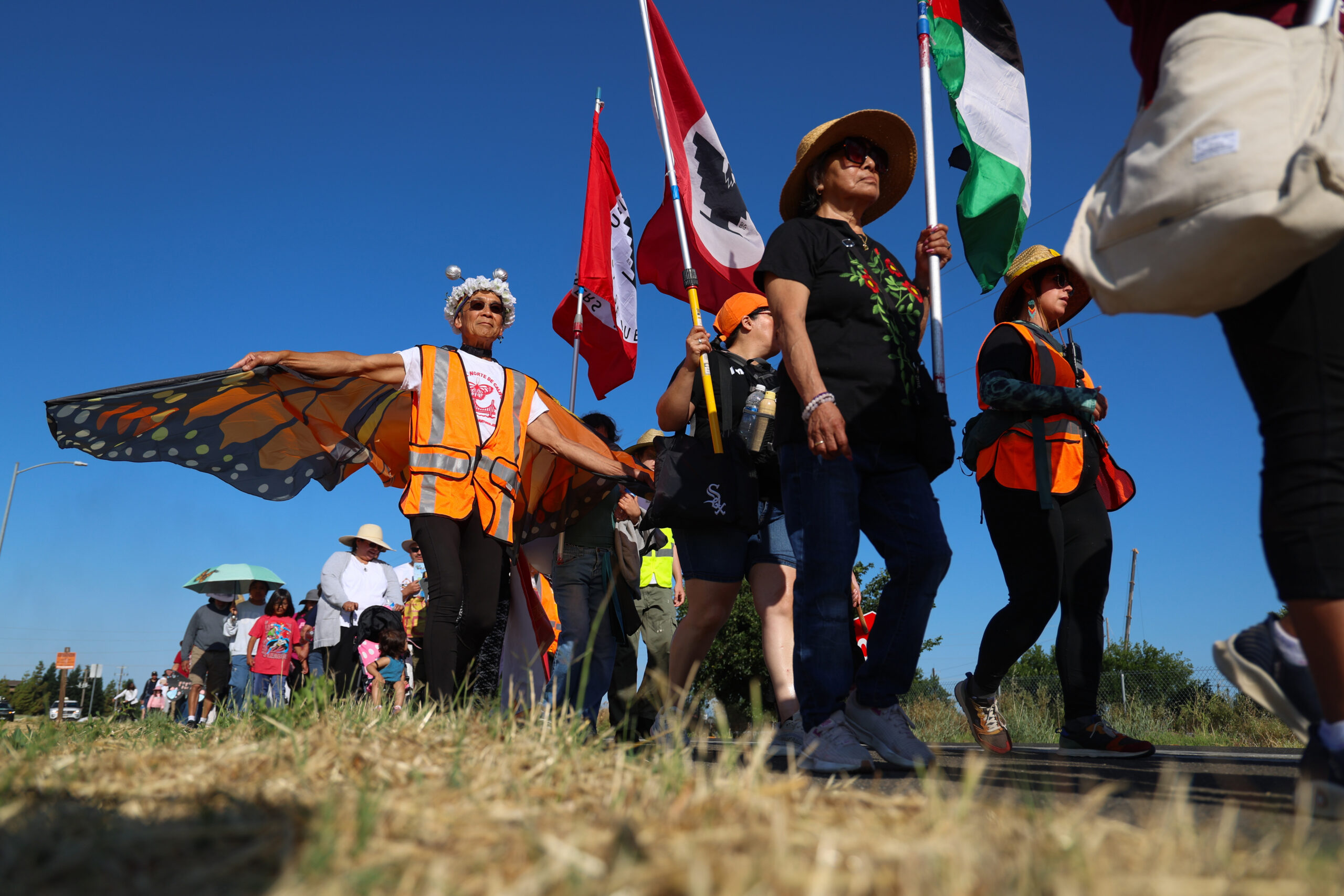
Sharat Lin, left, dances alongside protesters marching for immigrant rights. Lin uses movement and music to advocate for change. (Photo by Sydney Lovan/News21)
Held in June, as angry protests erupted in Los Angeles and other cities over President Donald Trump’s immigration policies, the march carried a quieter message: “We Belong Here – Citizenship For All!”
For Renee Saucedo, an organizer with the coalition, this year’s march carried special significance. As walkers made their way from Vacaville to Sacramento, they advocated for a fair path to citizenship, an end to deportations and the removal of Trump from office.
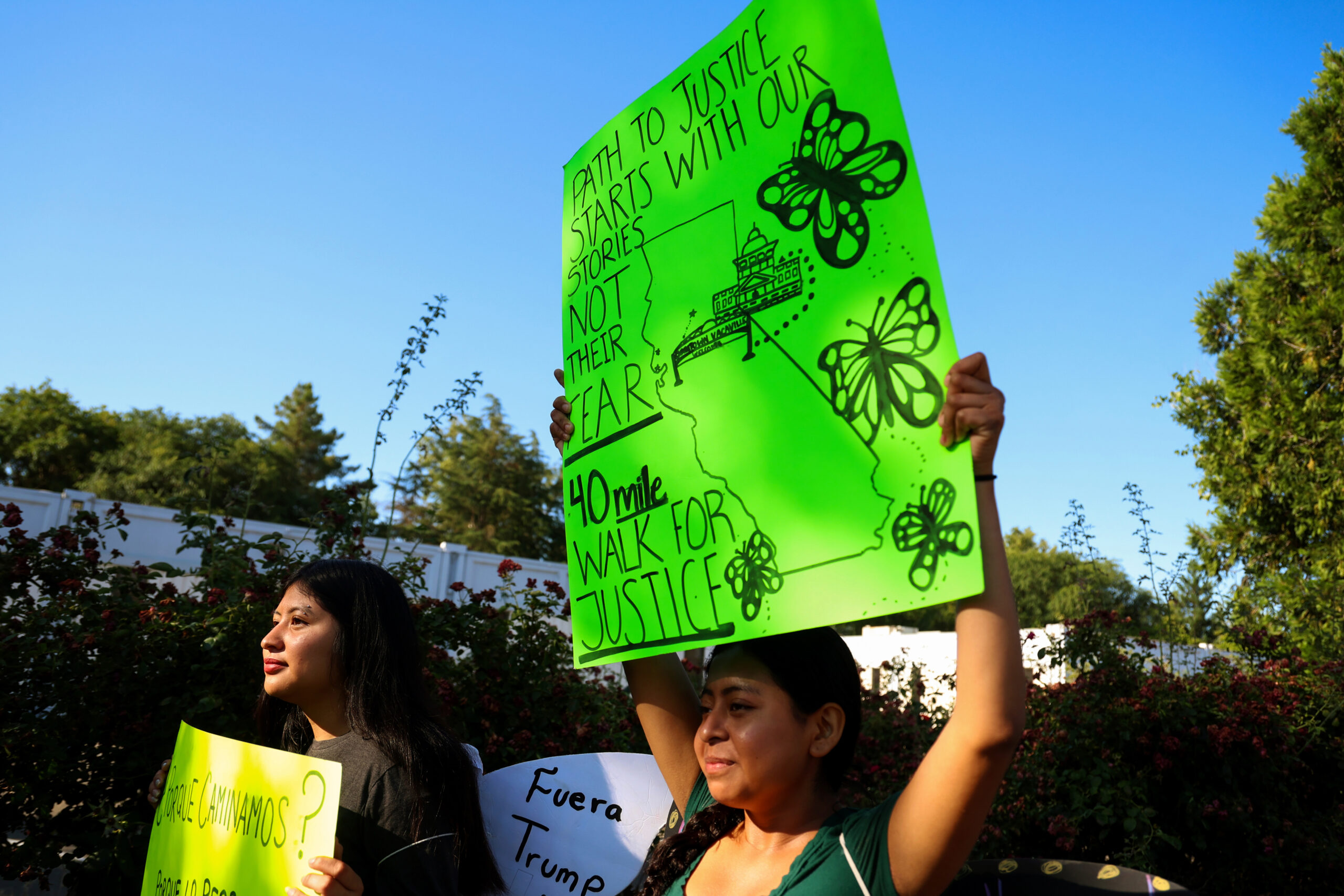
The “Walk for Immigrant Rights” brought together activists with decades of experience and first-time protesters – all connected by their desire to push back against deportations and fight for a fair path to citizenship for immigrants. (Photo by Sydney Lovan/News21)
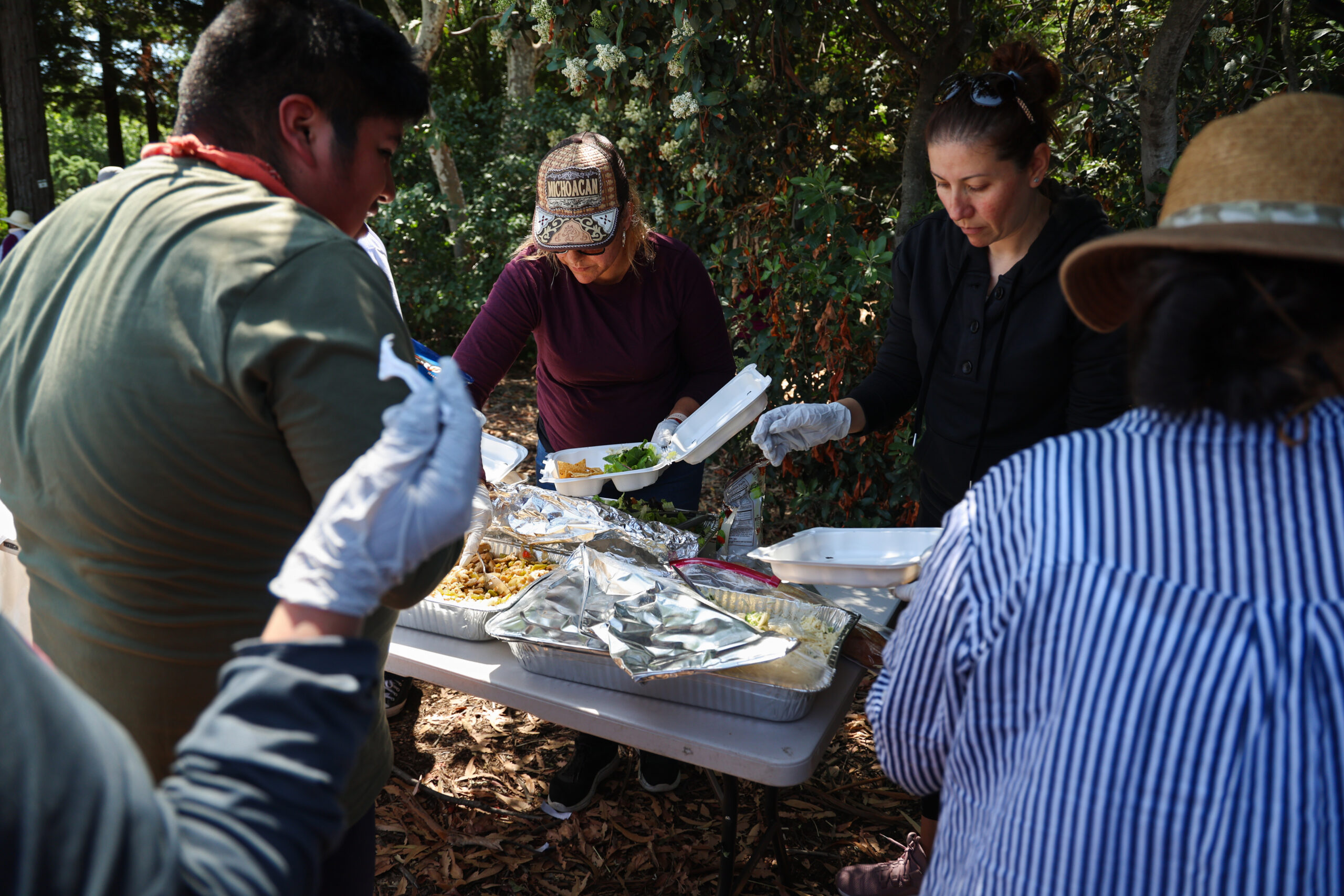
Volunteers serve lunch to marchers on June 7, 2025, in between Vacaville and Dixon, Calif. Free meals, as well as water and snacks, were provided to all participants. (Photos by Sydney Lovan/News21)
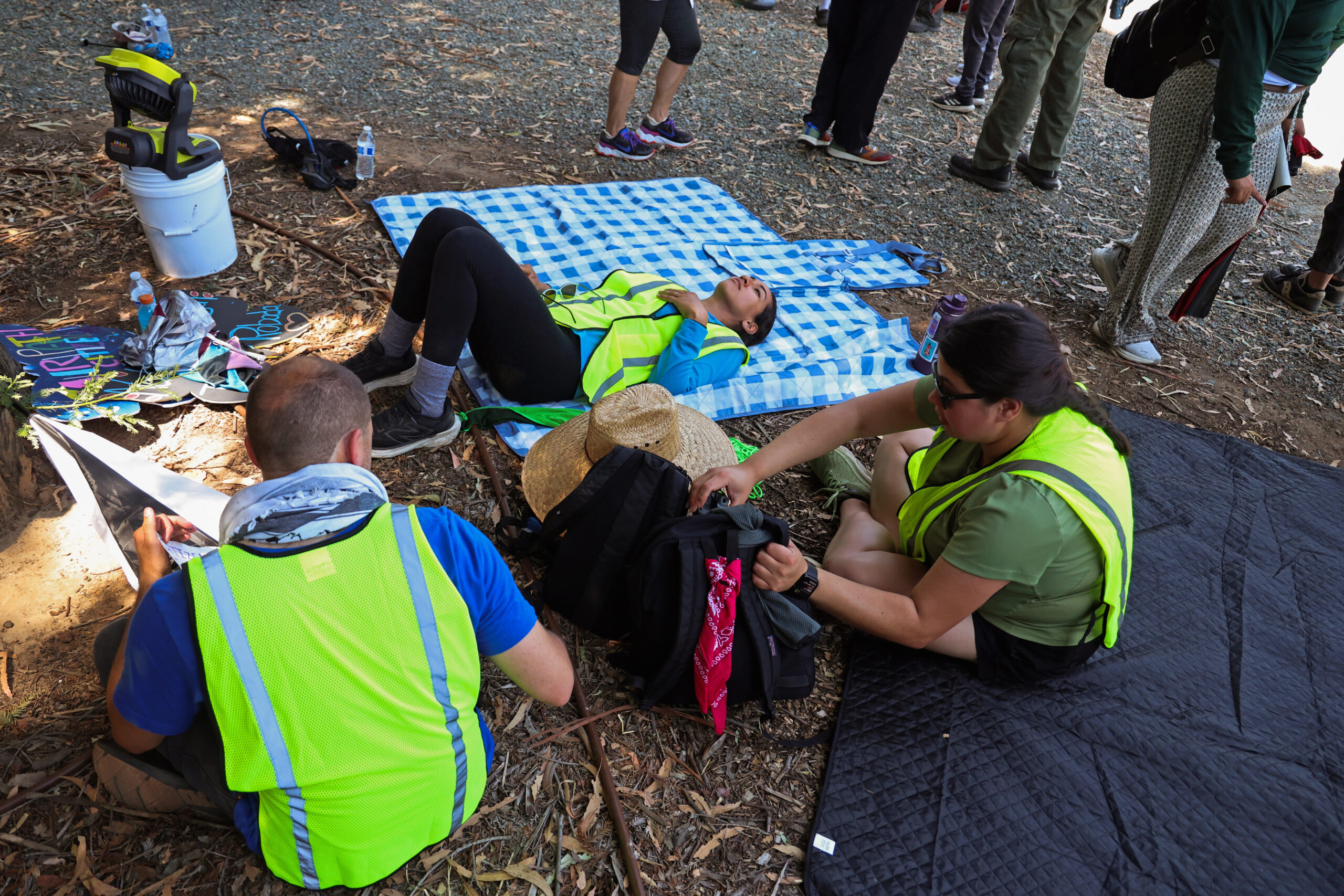
Melissa Valle, center, and Dora Estrada, right, rest during lunch on the first day of the walk. They volunteered with the safety team to guide the group through traffic. (Photo by Sydney Lovan/News21)
March organizer Renee Saucedo said the walk demonstrates how far immigrant communities are willing to go to “show the world the urgency that we find ourselves in.” (Video by Gracyn Thatcher/News21)
Trekking through rural farmland, marchers played music from portable speakers, danced on the side of the road and sang in Spanish – treating every step as a celebration of community, culture and resistance.
“The fact that we have 200 walkers each day walking for three days in a row in the heat, I think it shows the commitment that people have and the level of willingness to sacrifice in order to end the repression,” Saucedo said. “And this movement is only going to continue to grow.”
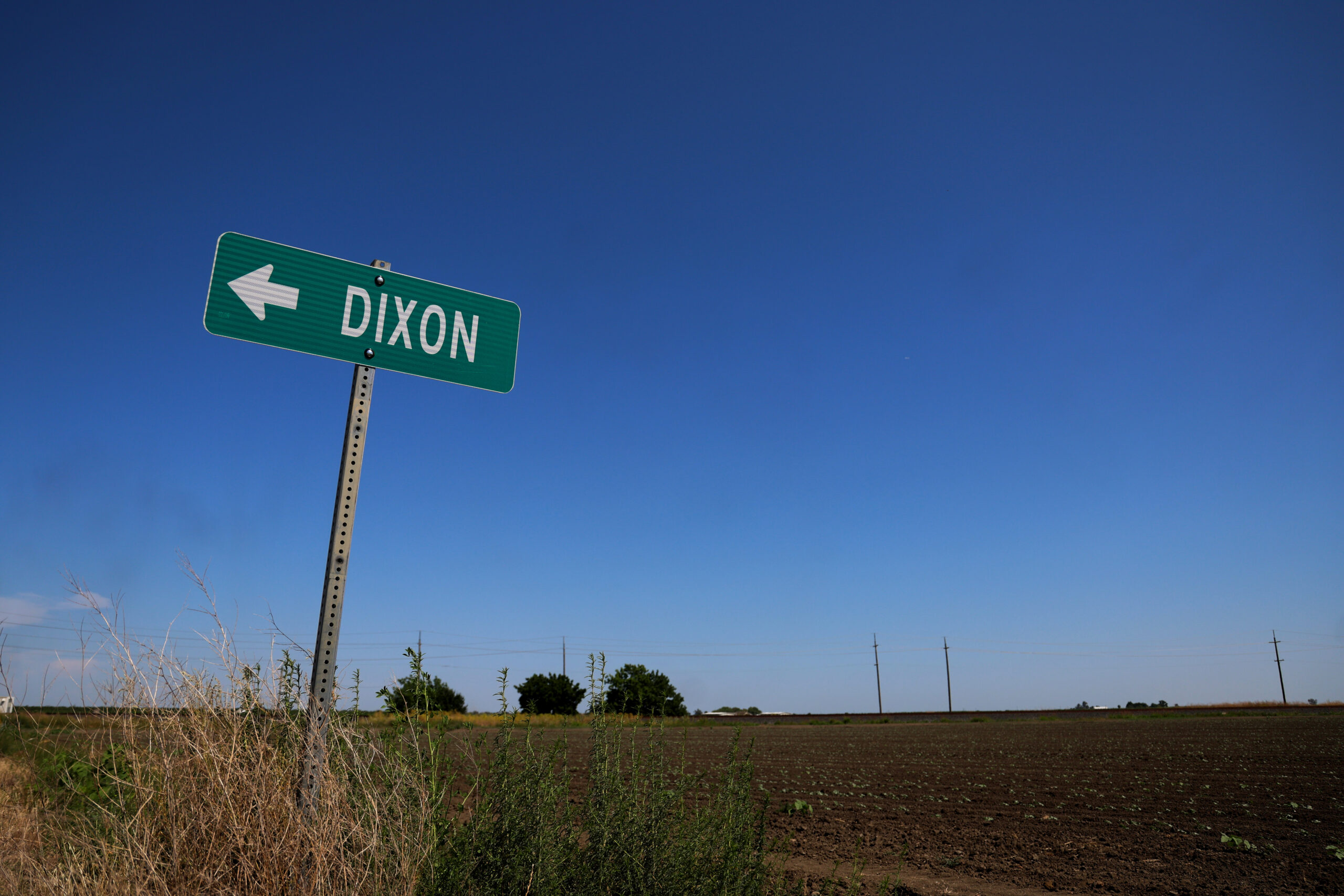
The immigration walk began on June 7, and over 100 people joined to march almost 40 miles from Vacaville to Dixon. (Photo by Sydney Lovan/News21)
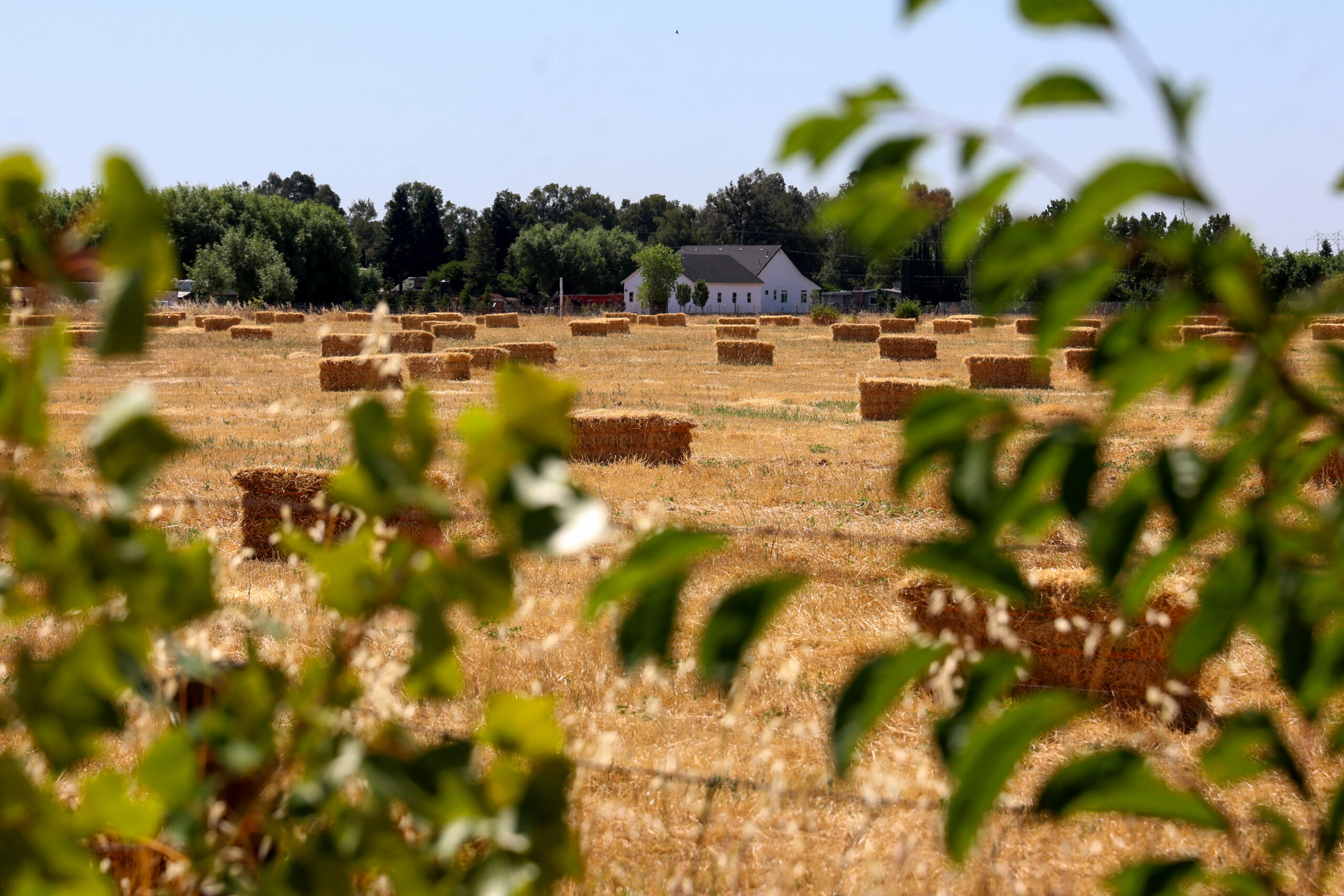
Protesters trekked through various landscapes, from residential areas to farmland. The caminata, a Spanish word describing a long, hard journey, was inspired by a walk César Chávez led in 1966 from Delano to Sacramento. (Photo by Sydney Lovan/News21)
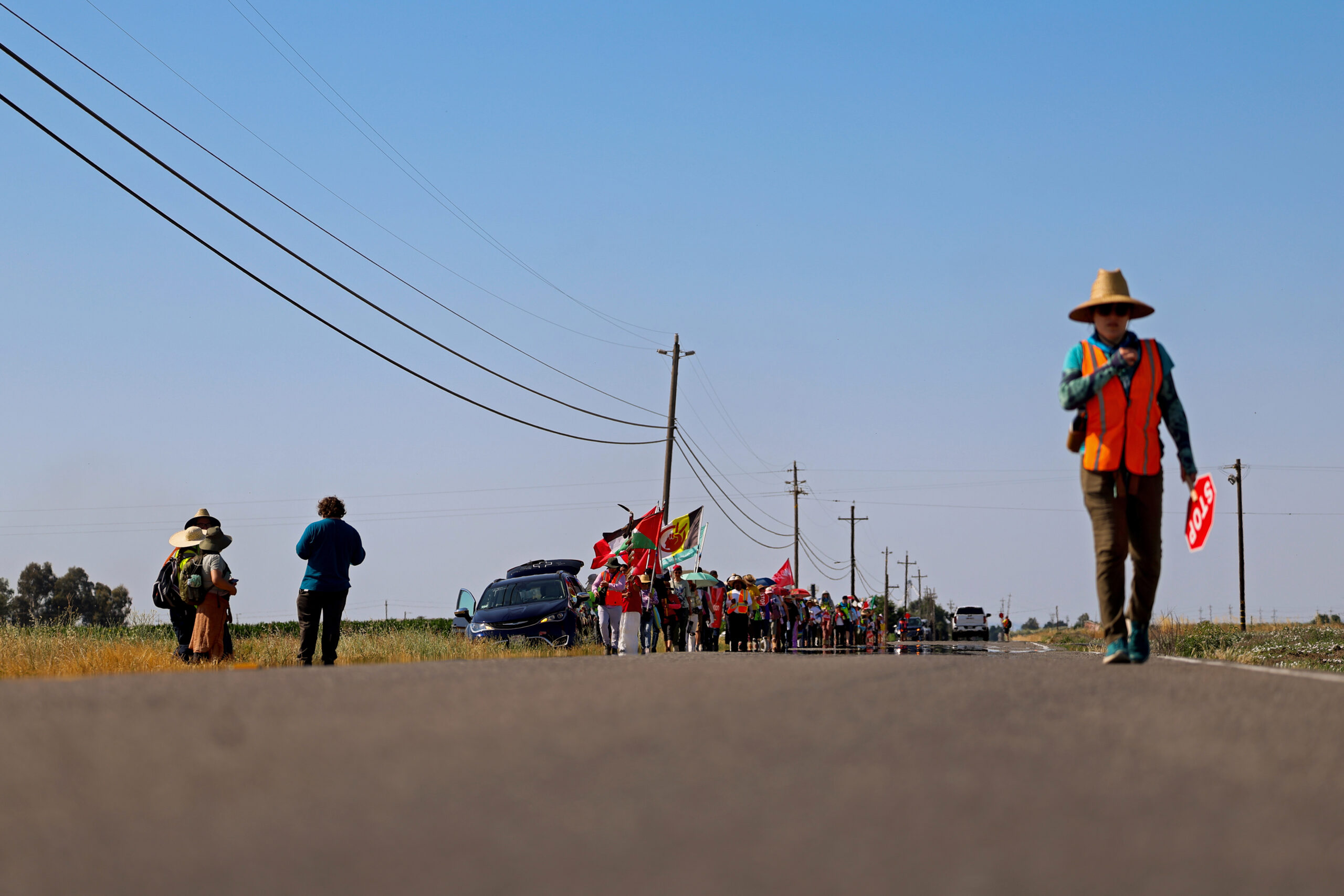
The motto for this year’s walk for immigrant rights was, “We Belong Here – Citizenship For All!” The safety team walked with the group the entire time, while a medical team drove in vehicles packed with supplies. (Photo by Sydney Lovan/News21)
The Rev. Paul Theiss, 76, carried a 15-pound cross during the walk. He once worked as a community organizer. (Video by Gracyn Thatcher/News21)
The event was inspired by activism of the past and crusaders such as Cesar Chavez and Dolores Huerta, co-founders of the National Farm Workers Association, which later became the United Farm Workers labor union.
In 1966, after a six-month grape harvest strike, Chavez led a 280-mile march from Delano to Sacramento, demanding safer working conditions, better pay and recognition of the farmworkers’ union.
Years later, when told their efforts wouldn’t succeed, Huerta responded with three simple words: “Sí se puede.” The phrase, meaning “Yes, we can,” became the rallying cry of the movement.
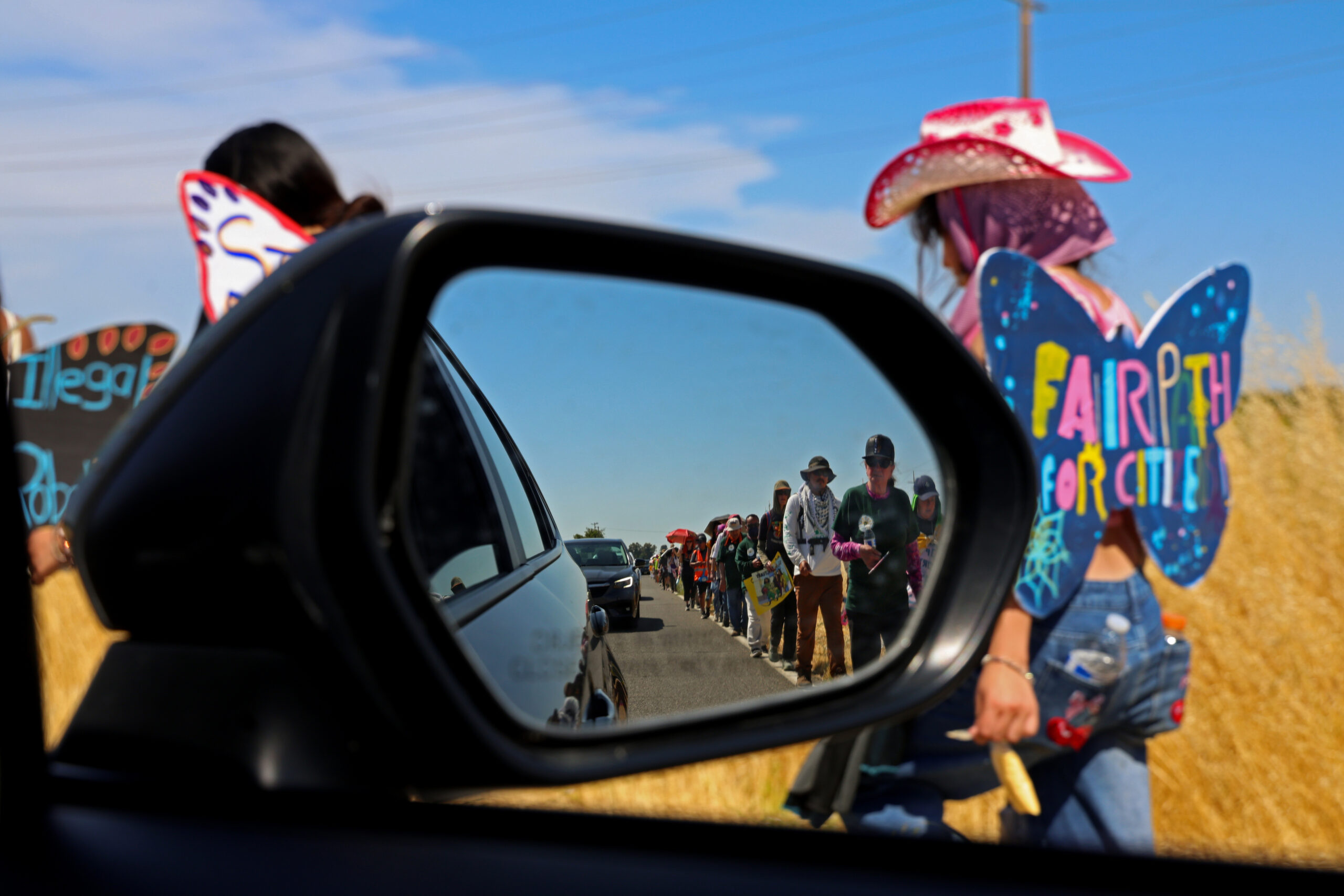
Participants march along the road, while support cars drive next to them – ready in case anyone needed a break from walking. (Photo by Sydney Lovan/News21)
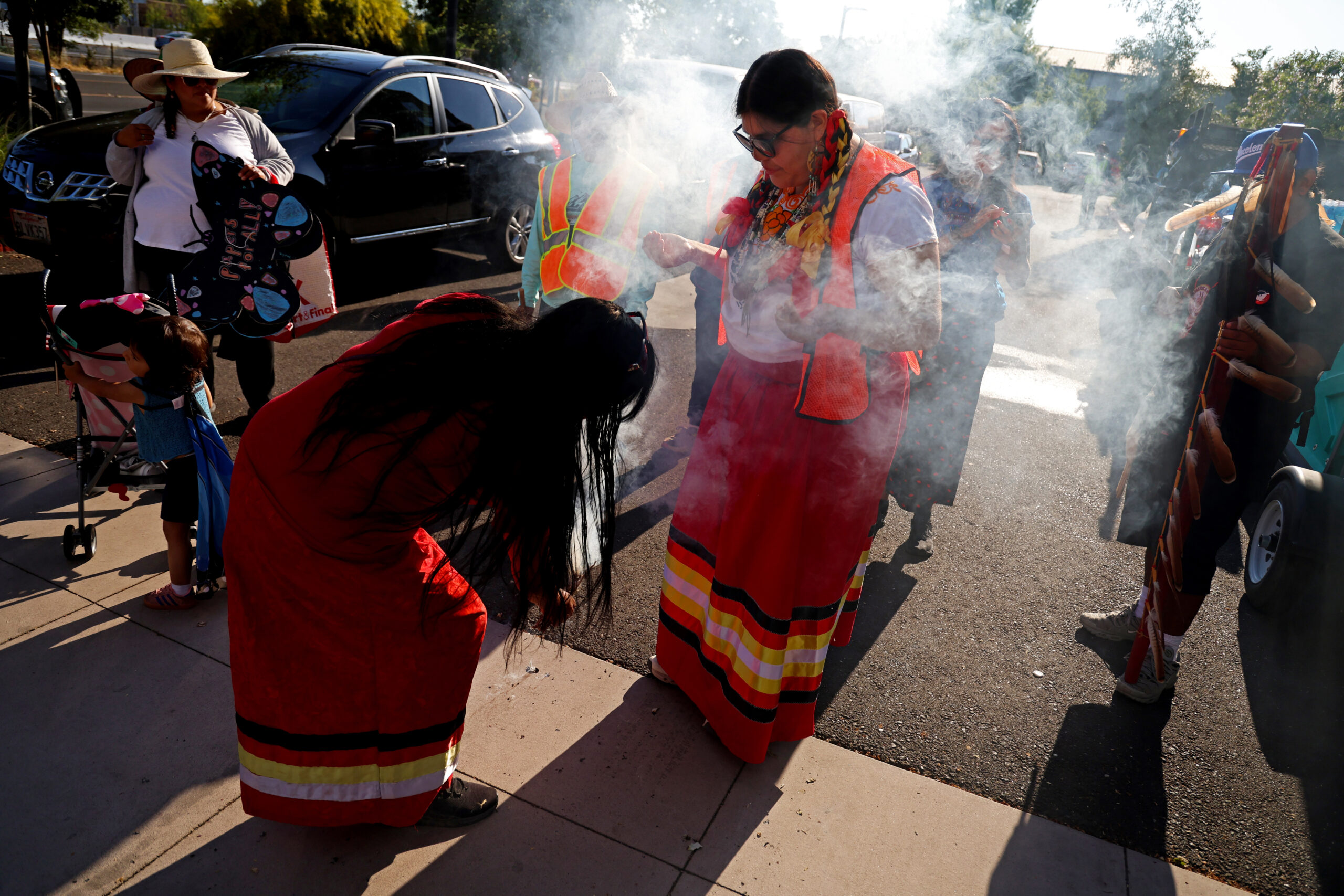
Lisa Peake, a member of the Pomo Tribe, burns sage around march participants in a ritual called smudging. Smudging is an important practice for many Indigenous cultures to cleanse and give protection. (Photo by Sydney Lovan/News21)
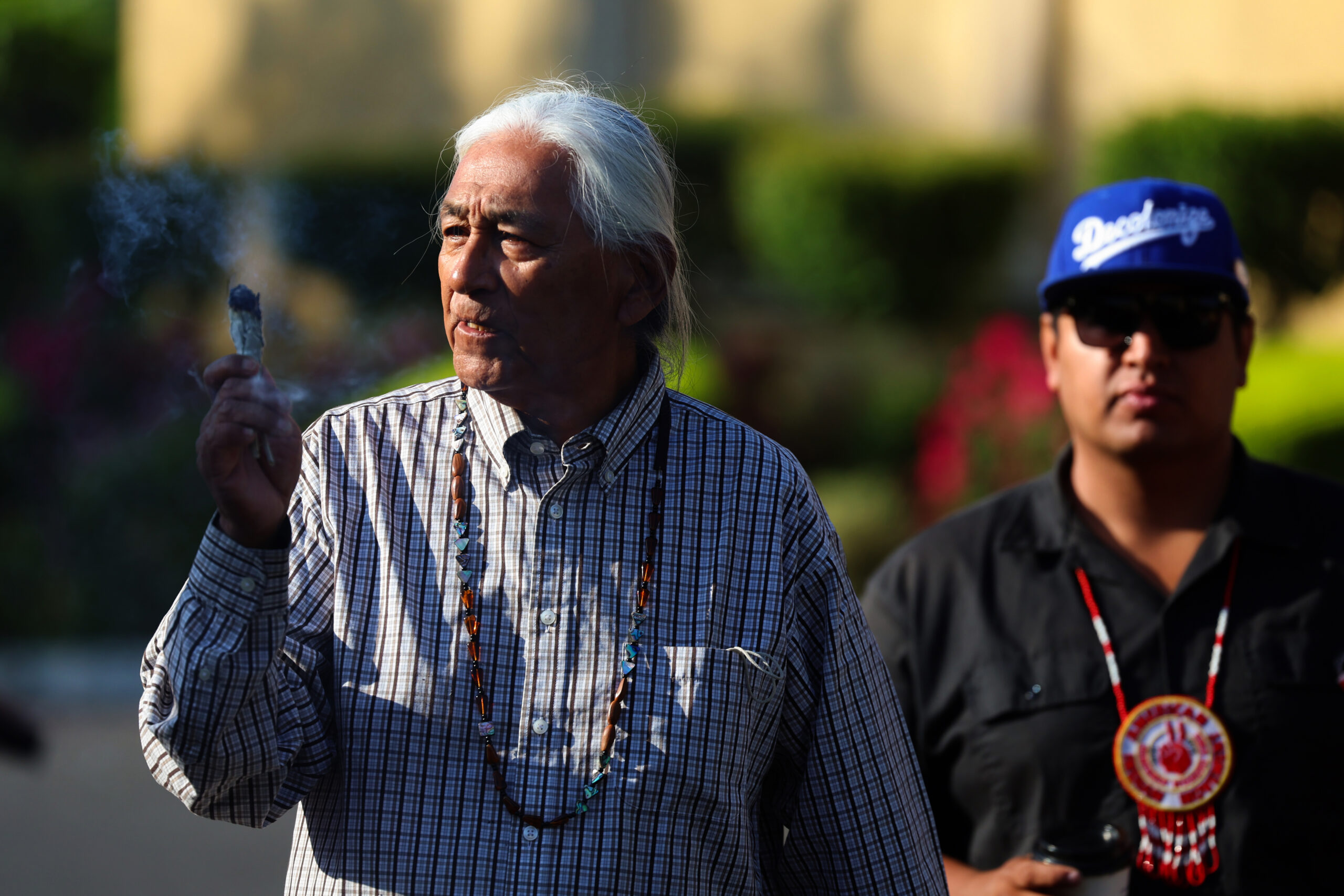
Bruce Gali, an elder of the Ajumawi band of the Pit River Indian Nation, offered a blessing each morning of the walk. (Photo by Sydney Lovan/News21)
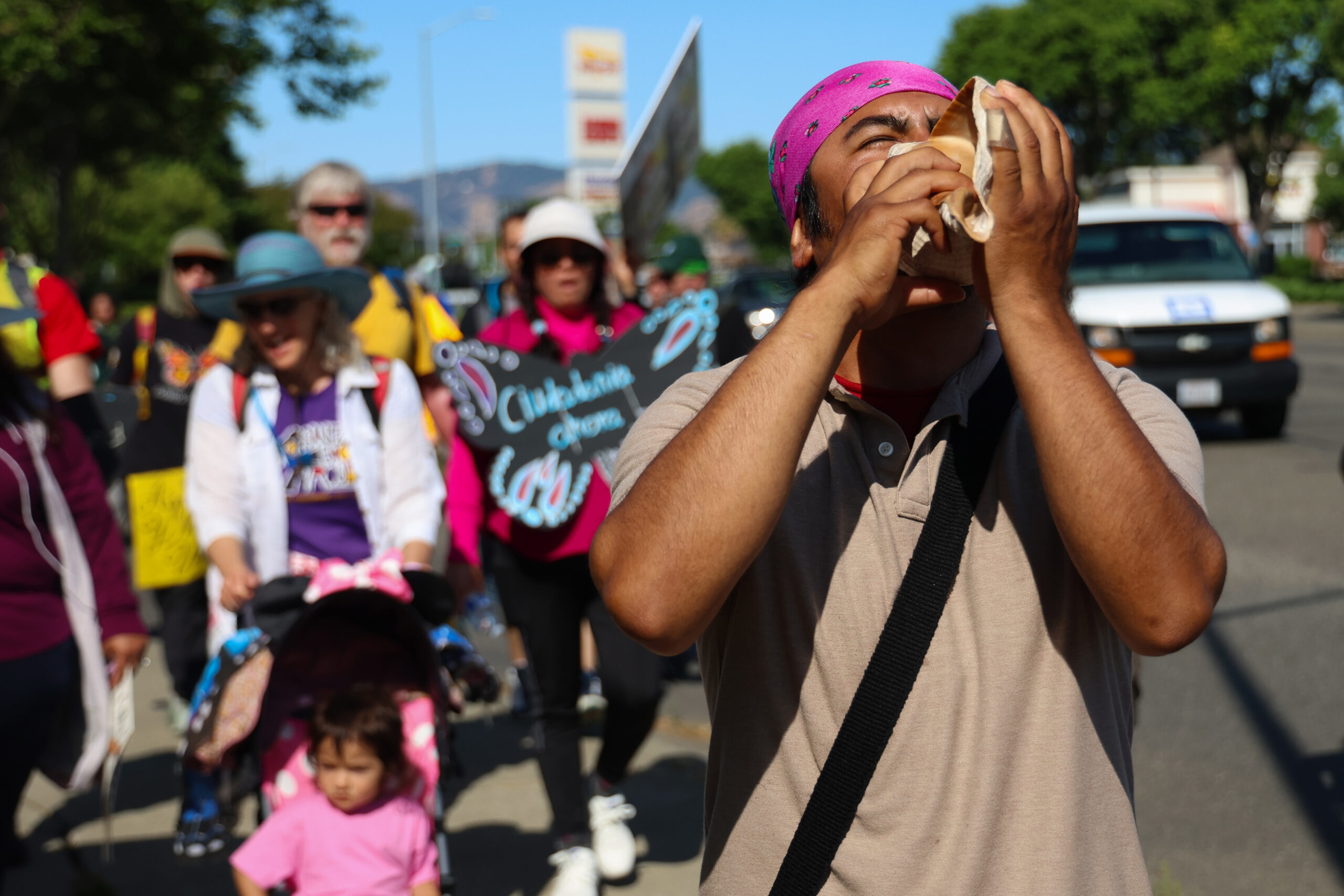
A march participant blows a conch shell while others chant during the walk for immigrant rights on June 7 in Vacaville. (Photo by Sydney Lovan/News21)
This year’s caminata – a Spanish word describing a long, hard journey – echoed that legacy. Among the walkers was Manuel De Paz, a 58-year-old immigration advocate from the San Francisco Bay Area and a former Temporary Protected Status recipient. This was his third such walk.
“This is the true social justice, because we are not fighting for people who have power; we are fighting for the weaker, for the ones who don’t have a voice,” De Paz said.
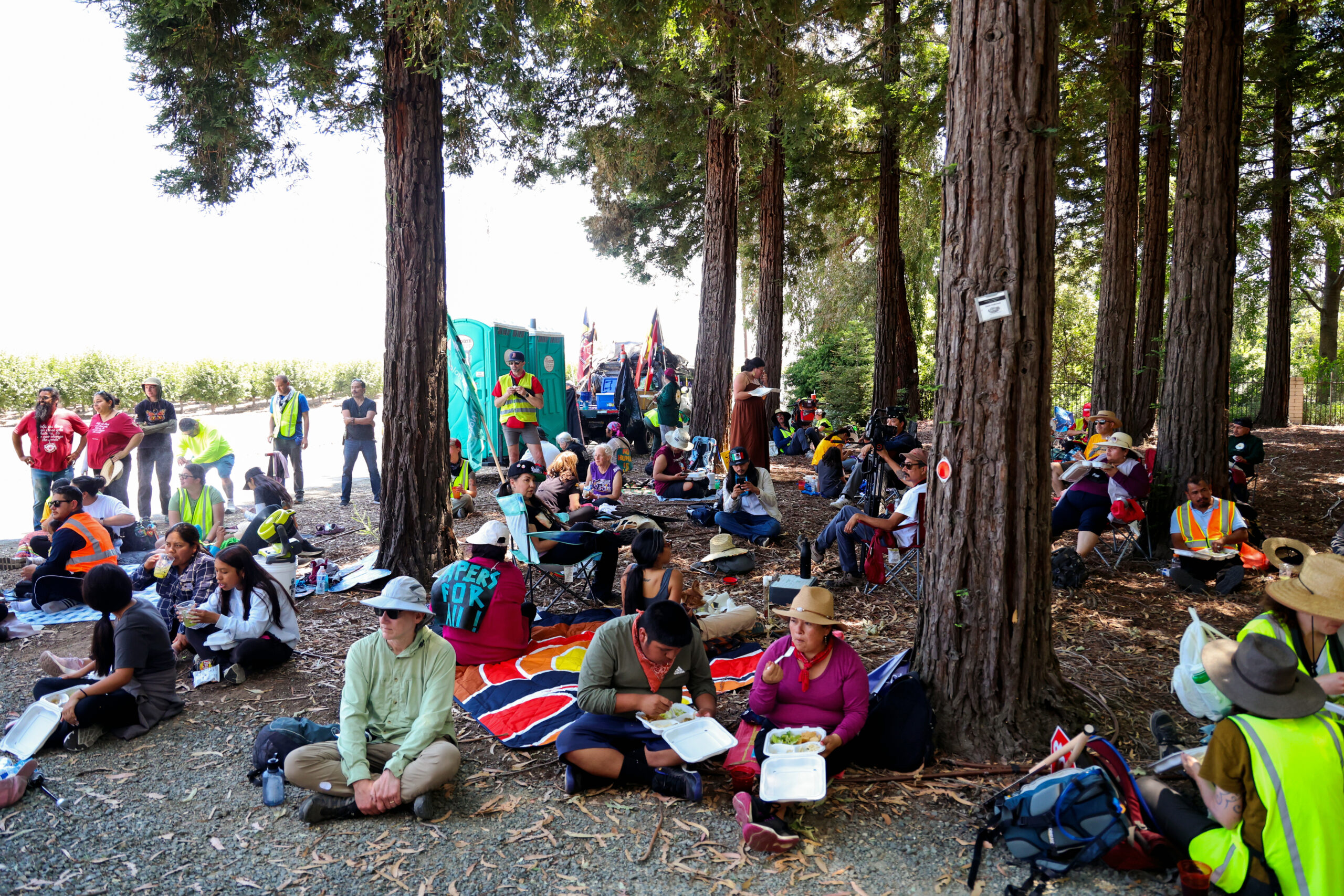
Marchers and volunteers stop for lunch on Day 1. Organizations from across California, including ALMAS Libres and East Bay Sanctuary Covenant, came together for the march. (Photo by Sydney Lovan/News21)
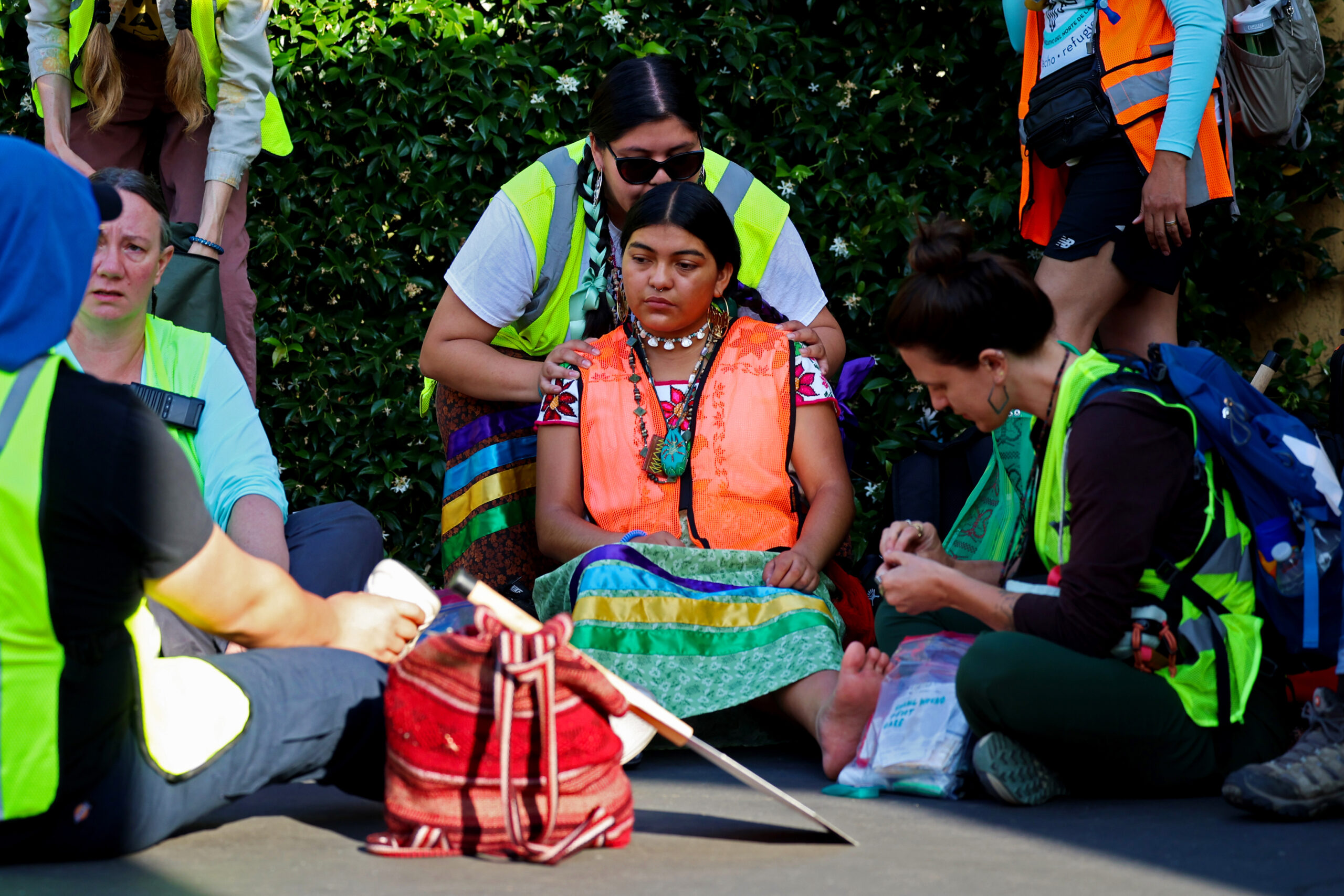
One walker gets treated for blisters on the second day of the march. A team of medical volunteers provided care for those walking – including help with blisters, heat exhaustion and dehydration. (Photo by Sydney Lovan/News21)
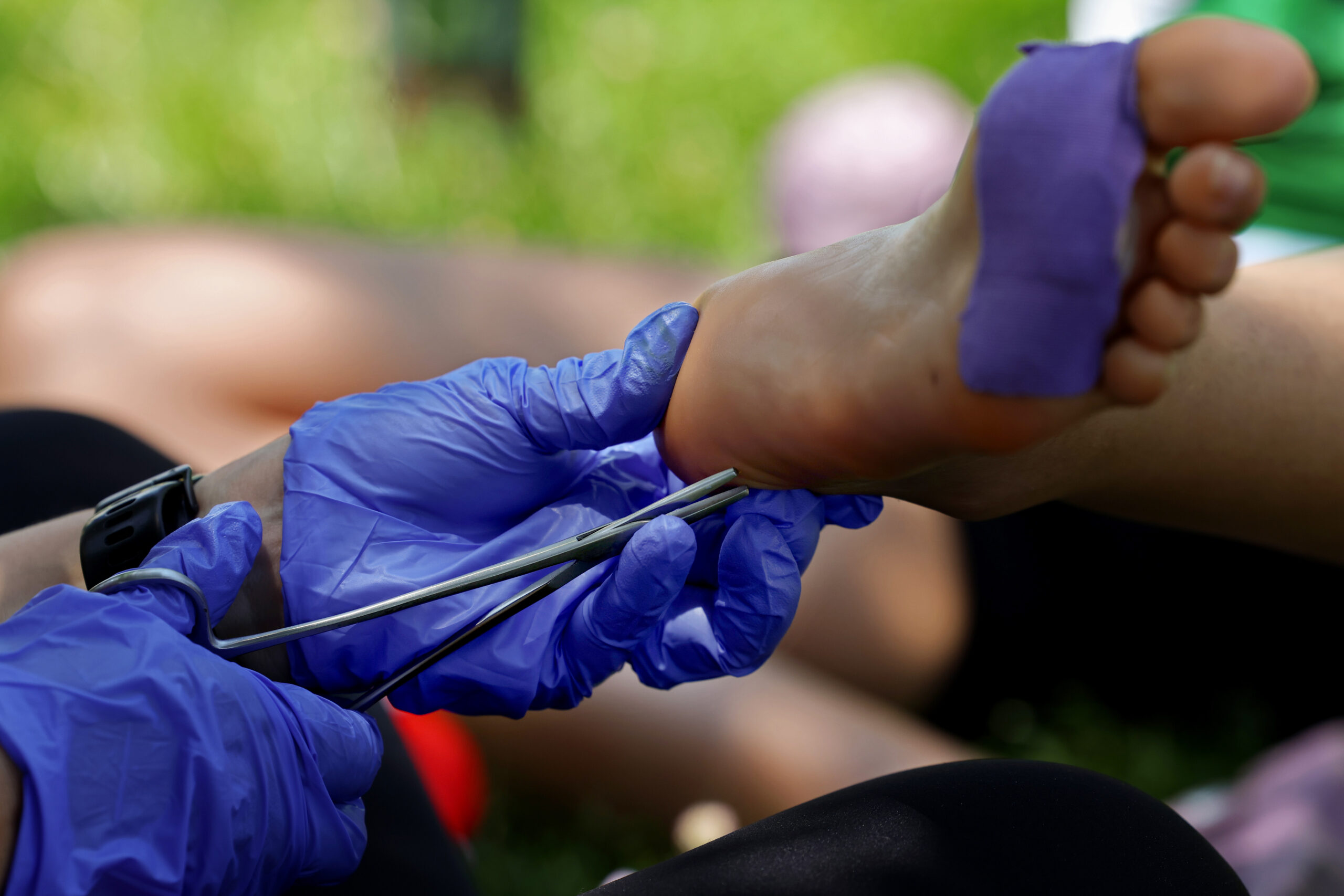
A walker gets care for blisters on June 9 in Sacramento. (Photo by Sydney Lovan/News21)
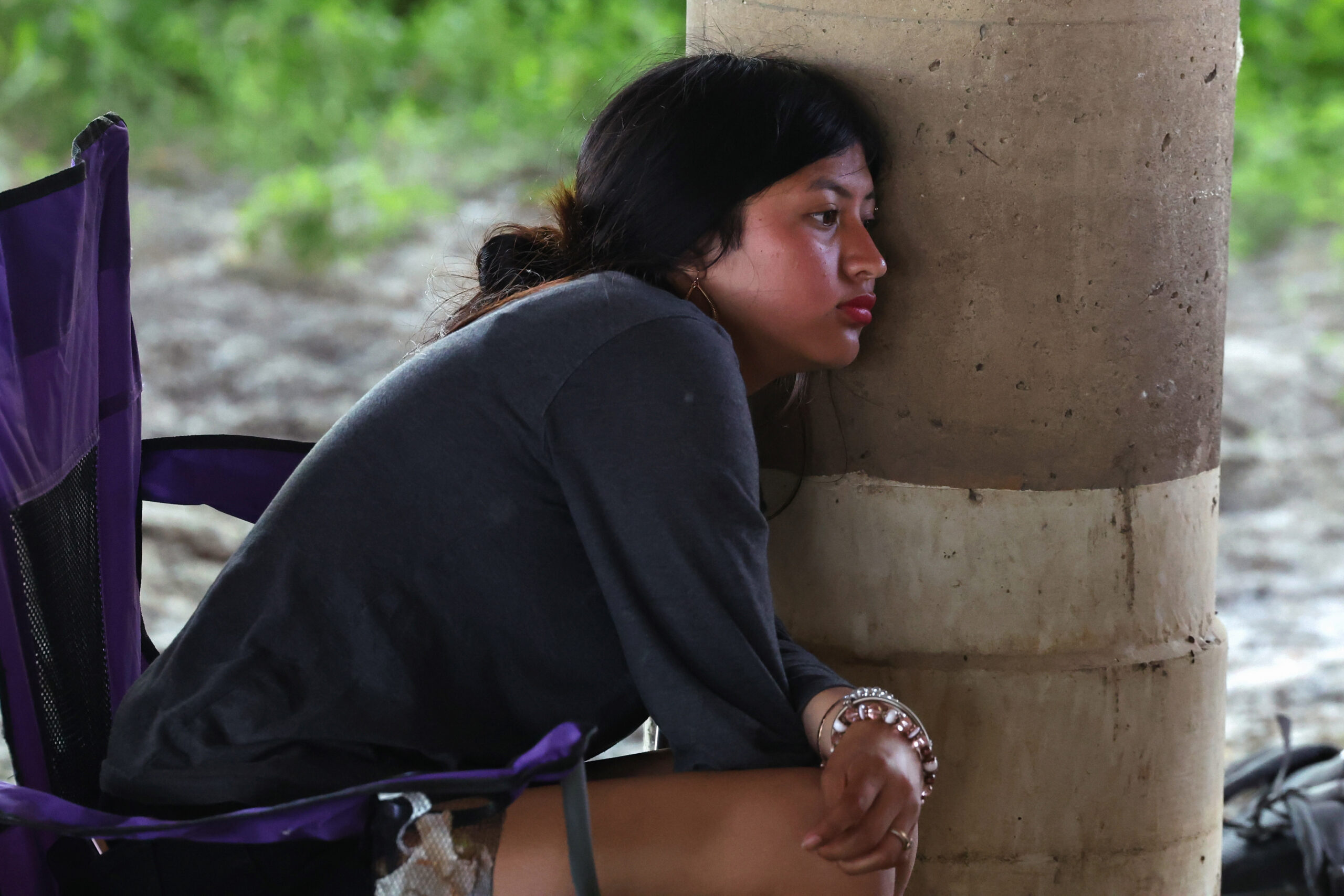
A protester rests under a freeway overpass on the last day of the walk. The group took frequent breaks throughout the march to ensure everyone remained safe and healthy. (Photo by Sydney Lovan/News21)
On the first day of the march, Trump authorized the deployment of 2,000 National Guard troops to Los Angeles, where demonstrators were met with tear gas and police barricades. But the walkers up north were welcomed.
One family, after seeing news coverage of the march and realizing it would pass by their home, hand-painted signs in both Spanish and English and set up a roadside lemonade stand. Their young daughter high-fived everyone as they passed.
“This was such an inclusive, family-friendly action,” said walker Danny Celaya, 25, a community organizer and Deferred Action for Childhood Arrivals recipient who lives in Oakland. “That’s ultimately what the movement is: families and workers sticking together, saying that we demand better.”
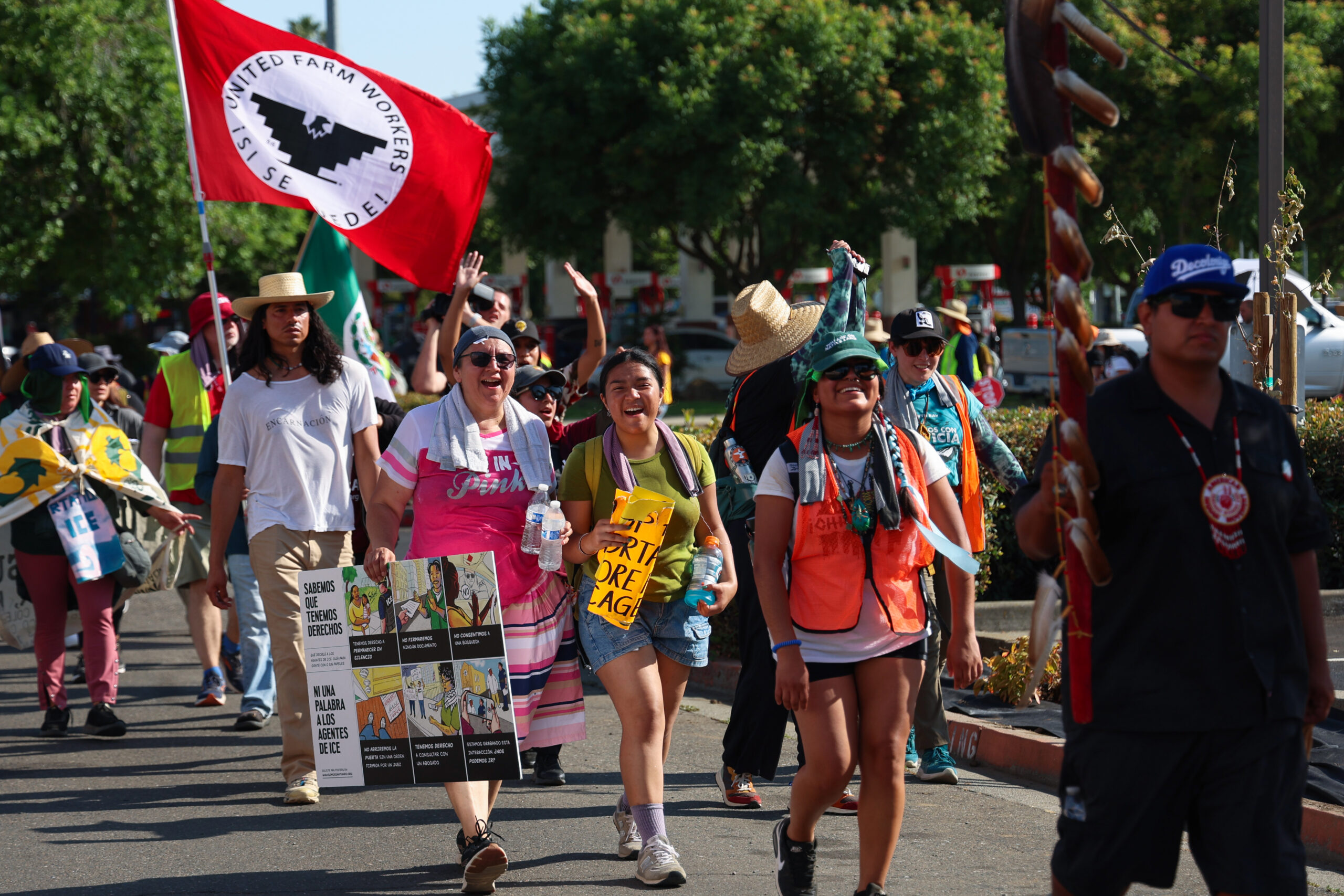
After walking over 13 miles, marchers and volunteers cheer as they reach Dixon, their first stop of the three-day walk. Similar to the farmworkers’ movement of the 1960s, the walk shows “urgency through sacrifice,” organizer Renee Saucedo said. (Photo by Sydney Lovan/News21)
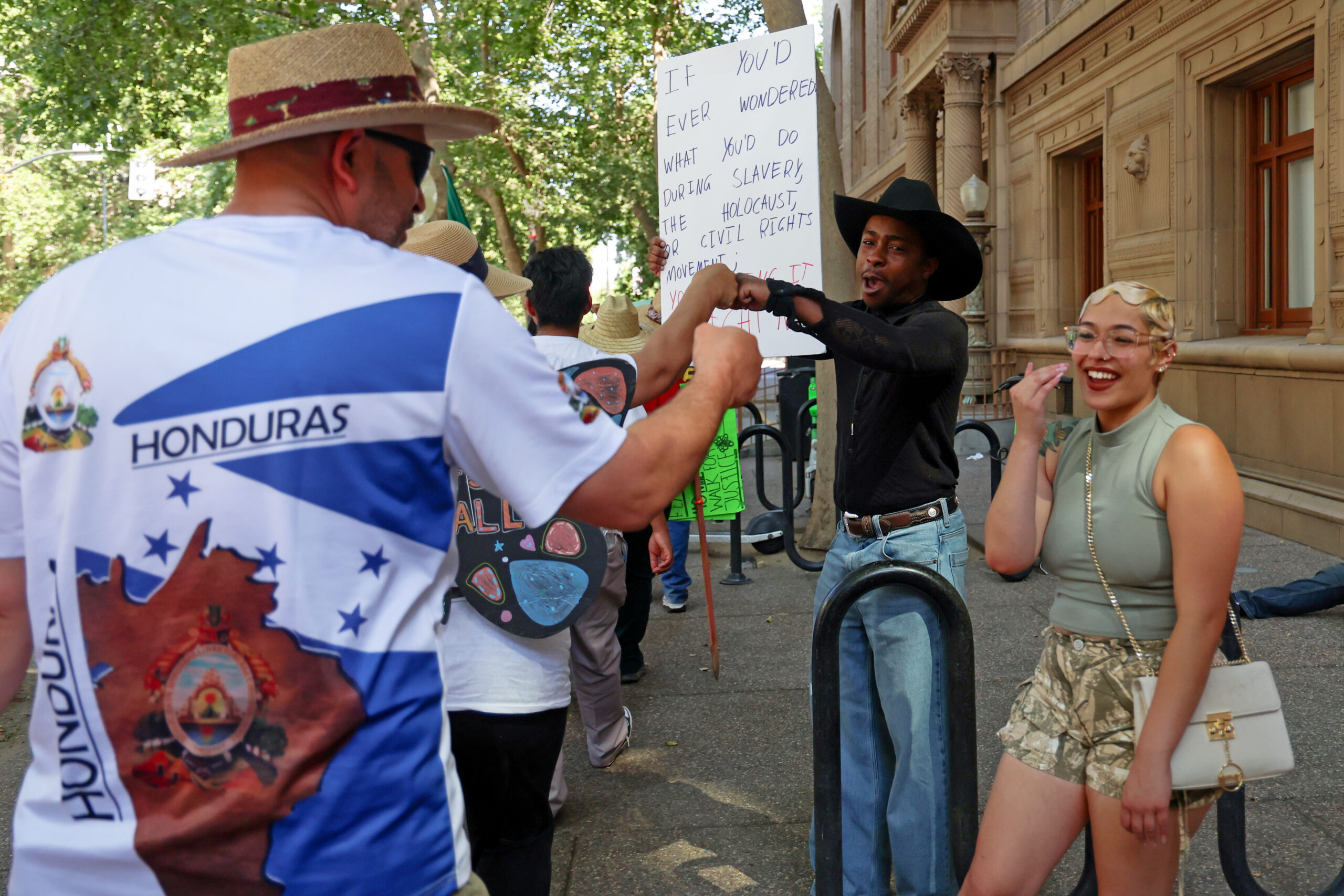
Jhonny Silva, left, goes to fist bump Stevante Clark, right, as participants of the immigration walk arrive in Sacramento on June 9, the final day of the march. Walkers joined hundreds of protesters, and state legislators, for a news conference at the state Capitol. (Photo by Sydney Lovan/News21)
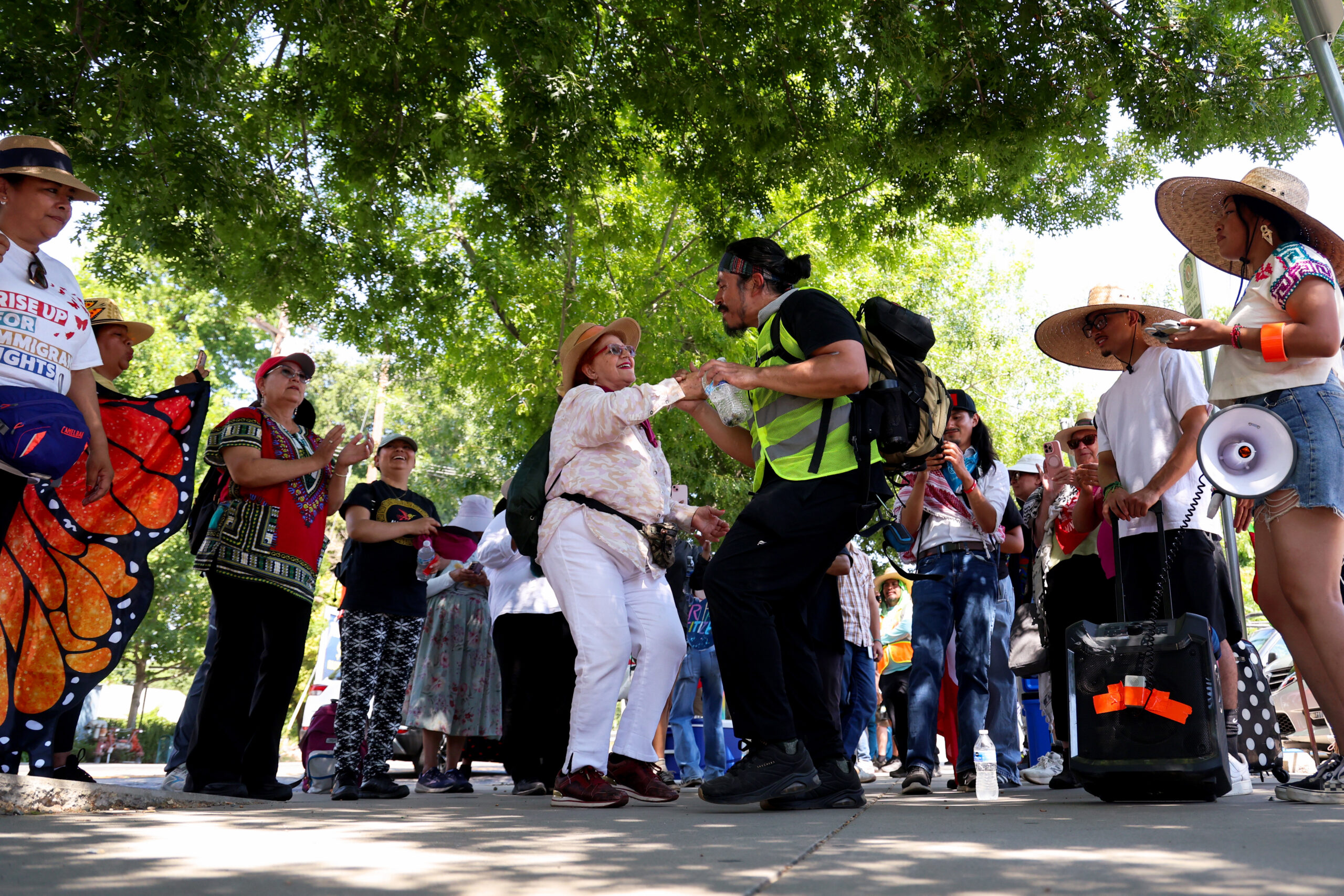
Participants celebrate the end of the march outside the state Capitol in Sacramento. “We are sending a message of love and light and compassion,” said walker Manuel De Paz. (Photo by Sydney Lovan/News21)
Jhonny Silva, a TPS recipient originally from Honduras, walked all three days and shared his deep love for America. (Video by Gracyn Thatcher/News21)
The march drew grassroots organizers from Santa Clara County to Humboldt. When walkers arrived at the state Capitol, they were joined by hundreds more and greeted with messages of solidarity.
“This caminata, this walk, wasn’t just a journey across miles,” state Assemblyman Mark González, a Democrat whose district includes downtown Los Angeles, told the crowd. “You carry the stories of millions. You carry the pain of separation, the fear of detention, the ache of uncertainty – but also the power of resilience, of unity and of a people who refuse to be broken.”
Feet aching but spirits high, the group continued to dance, sing and cheer. Their chant echoed in the streets of Sacramento – a call carried across decades, now renewed in urgency: “Sí se puede!”
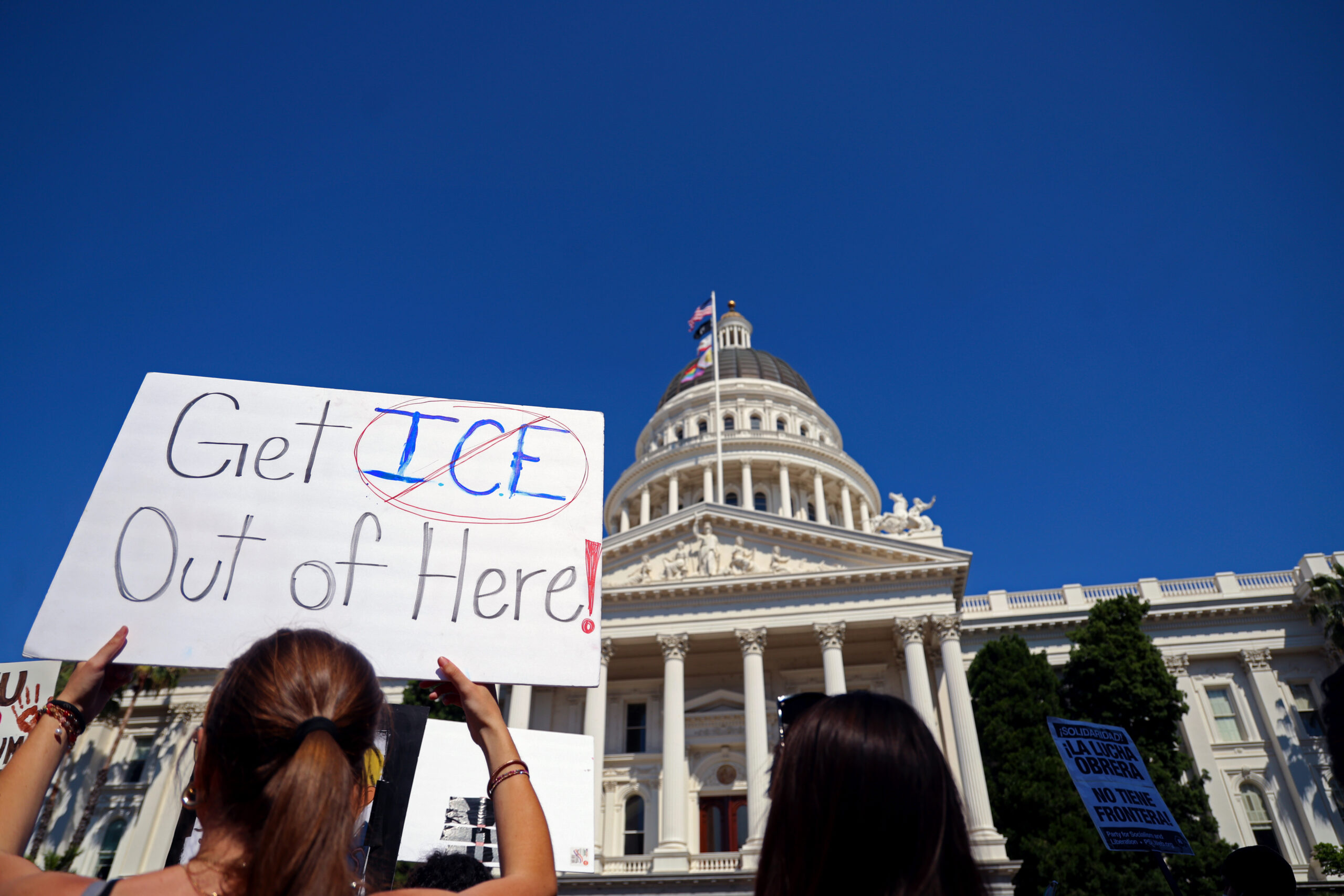
Members of the California Assembly and hundreds of protesters greeted marchers as they arrived at the Capitol in Sacramento. (Photo by Sydney Lovan/News21)
Sydney Lovan is pursuing a master’s degree in mass communication from Arizona State University’s Walter Cronkite School of Journalism and Mass Communication. In May 2025, she graduated from ASU with a bachelor’s in journalism and a minor in sustainability. As part of a program at the Cronkite School, Sydney traveled to Rwanda to work as a photojournalist. With Cronkite News, the school’s multiplatform news organization, she served as a photographer at the 2024 Paris Olympics. She has also worked as a photographer at The State Press, ASU’s award-winning, student-run news outlet, and as a multimedia intern for BJ Media.
Mikayla Melo is a senior at Syracuse University, dual majoring in psychology and magazine, news and digital journalism. She has interned with CBS News in Los Angeles, served as editor-in-chief of The Good Life Magazine and contributed reporting to an investigative police misconduct project with USA TODAY Network-New York. Mikayla has also worked as a news writer for the Maxwell School of Citizenship and Public Affairs.

Gracyn Thatcher is an undergraduate student at the University of Tennessee, Knoxville, majoring in journalism and media with a news focus. She has interned at WVLT Channel 8, Knoxville’s CBS affiliate, as an MMJ and reporter. She is the 2025-2026 news director of The Volunteer Channel, UT’s student-run broadcast station, where she also works as digital content manager. She expects to graduate in May 2026.